Wednesday, August 14, 2019

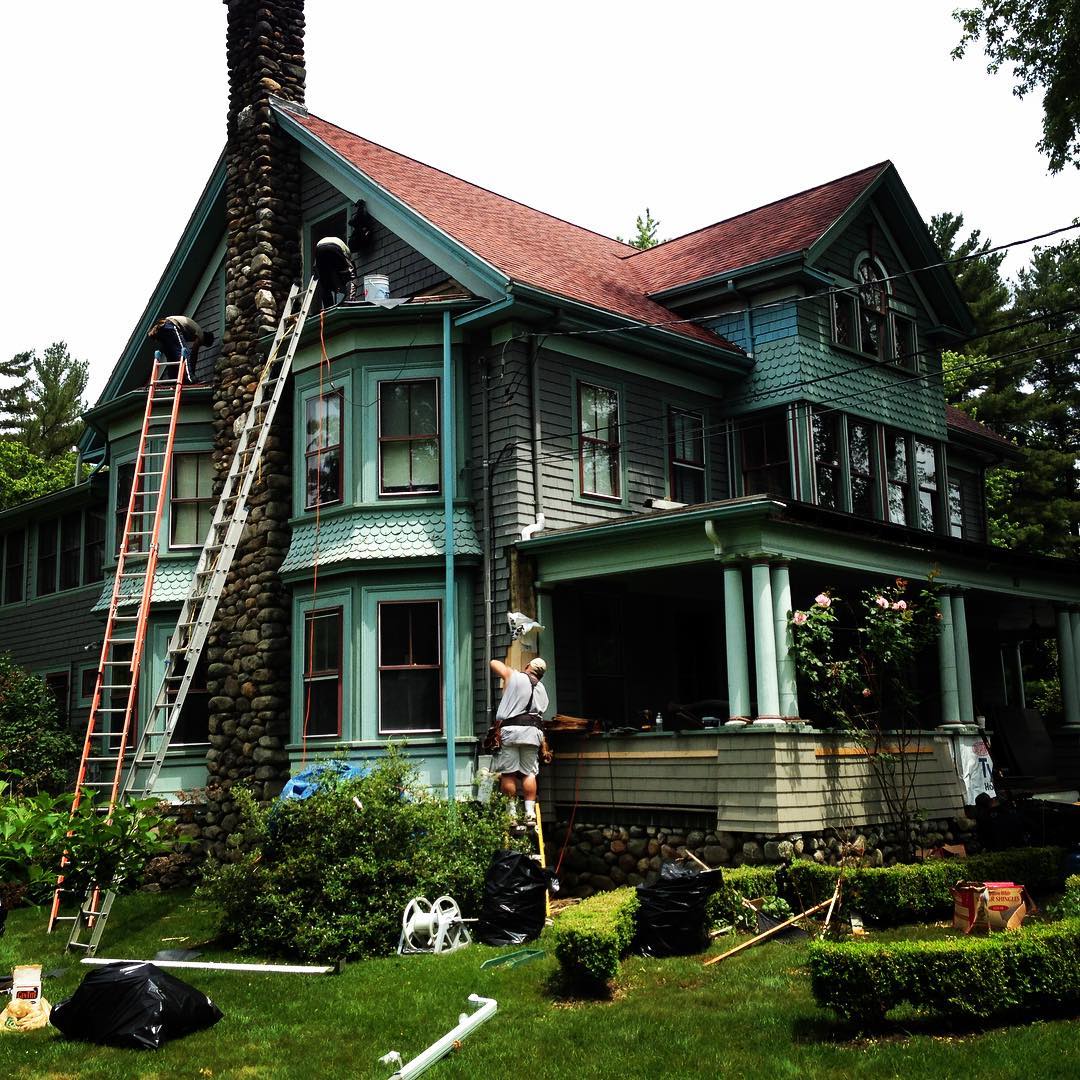
An Old House... Money Pit or Diamond in the Rough?


Contact me at www.kimlouie.net for a Free Home Value Report!
 
It's like a love affair; some older homes make your heart skip a beat! It is hard not to fall in love with an older home’s historic unique architecture, gabled roofs, hardwood floors, crown moldings, and antique light fixtures—older homes definitely have their charm.
The plastered walls, leaded glass windows, original chandeliers, and oak paneling make an old home as attractive as it can possibly be. If you found your love you should be aware of the following money pitfalls of old houses. You do not want to discover that beneath the surface of your dream home lays a dilapidated wreck.
This article provides you with some valuable tips to help you identify potential problems and some renovation rules, should you decide that this love affair is going to be your Gold Mine.
Foundation 
The foundation is the most important aspect of any home, especially for older ones. One problem that is common for older homes is called the “sulfate attack”. This can occur as a result of a chemical reaction between the soil and the concrete, which causes the foundation to crack and crumble and that can be very problematic. Another major concern with older homes is that the center beam of the home can begin to sink. This can result in a sagging roof, bowed walls, and sloping floors. If the old house has a bad foundation then renovating it can be very expensive where the cost can range from several thousand dollars to $50,000 depending on the size of the home. Also, in some cases, one might need to jack up the house to replace the foundation and shore up the centre beam.
Electrical Wiring 
When buying an older house, it is very important to find out if there are any problems with the state of the electrical and lighting system. Do the lights flicker? Is the current steady or do the lights fluctuate between bright and dull? Is there adequate lighting in the home? It’s important to have the wiring carefully inspected. Also, many older houses use aluminum wiring, which is cheaper than copper wiring but it is a serious fire hazard. Ensure that you factor the cost of rewiring into your offer price. Also, you should consider whether there are enough outlets in the home to suit the needs of a modern household. Install more outlets in order for you to run a number of devices at once like television, computer, stove, etc.
Lead Paint 
In older homes, lead paint is very common as lead was used as a white pigment in paint until the mid-1950s. If you are planning to repaint the home, call in a professional renovation firm as they know the safety precautions needed to be taken when repainting the house. Children and pregnant women should not be in the home during renovations.
Asbestos 
Asbestos is a mineral that makes a very effective fire and heat-resistant material that was discovered to cause lung disease. When the tiny particles of this mineral are inhaled, over a period of years they begin to damage the tissue of the lungs. In old homes, asbestos was used in carpet underlay, textured paints, roofing felt, electrical wiring insulation, acoustic ceiling material, and insulation. Getting the house checked for asbestos is very critical.
Galvanized Pipe 
Galvanized pipes are known to rust very quickly. Most insurance companies now refuse to cover water damage caused by leaks in a home with galvanized pipes.
Condition of the Older Home 
Just like people, years will eventually take a toll on homes as well. An older home may begin to sag and slope, which is why it's very important to know about the conditions of the house you’re planning on purchasing.
Older homes may be beautiful, but they aren't designed for modern living without a total update or upgrade. Make sure the house structure can be modified easily to suit a current living style.
For older homes, renovations are a challenge. To determine the price you are willing to pay, add up the estimated costs to renovate the property based on a thorough assessment of the house. Then, subtract that from the home's market value after renovation. Allow for an additional 5% for cost overruns and unforeseen problems plus inflation.

Preserve the Charm of Your Old House
If you have already fallen in love with this old house, then make sure you follow the golden rules in repairing your dream home and preserve its historic features and value.
  1. The golden rule of remodeling is, "do no harm". As you update your older home, make sure to preserve its historic details. Reuse existing materials. Keep historic moldings and hardware. Wire gas lamps for electricity. Keep distinctive examples of craftsmanship. Restore marbling, stenciling, and carvings.
  2. Don't try to undo long-ago renovations. Most buildings change over time, and alterations to your house may have a historic significance in their own right.
  3. Whenever possible, repair rather than replace. Don't throw away that old claw foot bathtub—have it re-glazed. Fix damaged doors, refinish old cabinets and patch cracking plaster.
  4. If historic features cannot be repaired, look for a similar item at an architectural salvage centre, or buy a new item that matches the old in design, colour, texture, and other visual qualities.
  5. And best of all make sure you hire a contractor that shares your passion and understands your love affair with your old house.
Good luck, you may have found your Gold Mine.


What is a Mortgage Pre-Approval?


Contact me at www.kimlouie.net for a Free Home Value Report!
 
Securing a mortgage pre-approval is one of the first steps to take before beginning your house hunting process. A pre-approved mortgage is a tentative promise from a lender that it will loan you a certain amount of money for the purchase of the real estate, for a certain term and at a certain interest rate. The lender will base its decision upon your income, credit score and assets.
A pre-approval is not a binding commitment, but rather an indication that the lender is willing to extend a mortgage to an applicant once a suitable property has been found and secured via a real estate contract. It is usually valid for 90 to 120 days. The final decision is generally subject to certain conditions being met before the mortgage is finalized such as the appraisal of the real estate is high enough to protect the lender in the case of default, the property title is clear and the property meets inspection standards, plus a number of other factors.
Even though you have been pre-approved by a lender, it is best practice to include a condition of financing in the purchase agreement to give you time to gather your documents and the lender time to review and give final approval to your application. Once you have a signed purchase agreement, the lender will require written income verification and proof of down payment, as well as proof the title is clear, the property meets inspection standards, and the appraisal of the property is high enough to protect the lender in case of default.
Advantages of a Pre-Approved Mortgage
1. Knowing what you can afford
Knowing how much you are able to spend before purchasing a home is always a good idea. With a pre-approved mortgage, you know exactly where you stand before shopping for a home.
Many real estate agents will want you to have a pre-approval in place before they take you house hunting. This is to ensure that they are showing you properties within your affordable price range. As a general rule, your housing costs, including your mortgage payment, taxes, and heating expenses should not exceed more than 32% of your gross household monthly income.
2. Pre-approval makes buying more convenient
If several buyers are interested in the same property, being pre-approved can give you the advantage. Sellers are more likely to accept an offer from a buyer who has been pre-approved over a buyer who has no guarantee that they can attain the financing for the amount they offered.

Condo "Occupancy Fees" Explained


Contact me at www.kimlouie.net for a Free Home Value Report!
 
Whenever you purchase a new condo, there is a period of time between when you take occupancy of your unit and when you take ownership of your unit. This is known as the ‘occupancy period’ or ‘interim occupancy’. During this period you will be requested by the developer to pay occupancy fees or ‘phantom rent’ as it is also known.
The Condominium Act requires condo developments to be constructed to a substantial level prior to registration of the condominium plan. Title to a unit cannot be transferred until the condominium is registered.
Thus, with newly built condominium apartments, there are two “closings”. The “interim closing”, occurs at the time of occupancy and the “final closing”, occurs at the time of final registration.
The process works something like this; the developer undertakes to build a condo development by submitting a site plan with the Municipality. When the Municipality registers this site plan it becomes a “Registered Site Plan”, setting out exactly what the developer is promising to deliver.
The developer then sells the suites as “pre-construction”; based on floor plans, brochures, etc. Once the developer sells enough units, say 60% or more, they start the construction while continuing to sell the units.
When construction is completed, the municipality verifies the building to be in accordance with the registered site plan and issues the “Occupancy Certificate”. The developer starts to contact all the buyers notifying them of their occupancy date, at this stage your unit is ready and liveable; you take possession of it, but not ownership. This is the first or “Interim Closing”.
Since the buyer’s down payment is deposited into the lawyer’s trust account, the developer does NOT receive any money until the building registers (final closing), a process that normally takes 4-6 months.
Until such time you must pay the developer “occupancy fees” for the right to live in the unit. The amount of the occupancy fees is roughly equivalent to the interest on the amount outstanding on the purchase price. For example, a $300,000 condo with 25% down means you must pay monthly occupancy fees roughly equal to interest payments on $225,000.
When the municipality completes its process and registers the building, the second or “final closing” take place. This is where the purchasers receive title to their property and their mortgage payments start, and this is when the developer gets his money.
During the occupancy period, the buyers undertake a portion of the developer’s mortgage, also called “Phantom Mortgage”, which is equal to their proportionate share of the overall condo.
The occupancy period is normally 4-6 months, but the higher up you are in the building, the shorter the occupancy period will be. So if you buy a unit on the ground floor, you can expect a long occupancy period. If you buy the penthouse, you will likely have a very short occupancy period.
There is no way to say absolutely how long the occupancy period will be. In most cases, the length of the occupancy period depends on the experience level of the developer. Experienced developers who are familiar with the process and have diligent lawyers working behind the scenes for them know how to build and how to register a building as quickly as possible.
It is in the developer’s best interest to register the building as quickly as possible and to have the occupancy period as short as possible. This is because they don’t get their money from the banks until the building is registered and all the unit owners have their mortgages commence.
The “Occupancy Fee” is made up of three components and is roughly equivalent to the:
  1. interest calculated on a monthly basis on the unpaid balance of the purchase price 
  2. the monthly maintenance fee contributed for the unit; and
  3. a factor for property tax
In total it will be about the same amount as if you took a mortgage. But you cannot get a mortgage because there is no “Title” to the property, thus banks cannot issue a mortgage.
Occupancy fees will be paid to the developer when you purchase a new condo, it does not apply for re-sale condos.
The purchaser can avoid paying the interest portion of the occupancy fee should he/she elect to pay the full balance of the purchase price owing on the date of occupancy. However, in order to do this, the purchaser or his lawyer must request this during the 10-days rescission (or cooling-off) period.
In all the cases it is left to the developer to include or exclude any of the above components in the occupancy fee, as long as this is made clear in writing and disclosed in the developer’s disclosure documents.

Choosing Outdoor Patio Furniture


Contact me at www.kimlouie.net for a Free Home Value Report!
 
Patio furniture can greatly enhance your outdoor living space.  By choosing your patio furniture wisely you will not only create a great outdoor ambiance but will also extend your inside décor to the patio and backyard.  
Choosing patio furniture should not be a hard decision. There are many types of outdoor furniture to choose from.  Taking a walk through a home improvement store, a patio furniture store, or a garden center during the spring and summer months will remind you of the many types and styles of furniture that are available.  Since there are so many options, selecting outdoor patio furniture or accessories to suit your decorating style should be a breeze.
Several factors should be taken into consideration: price, style, and landscaping:
When it comes to price, you need to examine your budget carefully. While it’s true you get what you pay for, it is possible to get an excellent deal for a high-quality product. Your comfortable patio furniture should not be a place where you skimp on money because it is an investment that will last for years to come. It is important to remember though, price doesn’t always equate to quality.
There are several different styles of comfortable patio furniture and what you choose will depend on your personal taste. Outdoor furniture is most commonly made out of wood, metal, plastic, wicker, or a combination thereof. Choose a style you like that fits your budget. Focus mostly on the cushions themselves–some sets may not come with them–because this is where your comfort is going to come from. Some sets may offer more comfortable cushions than others. Who wants to sit on the bare furniture? When you choose the material, consider the climate you live in and how well it will hold against the elements.
Depending on the number of people you wish to seat and the available space, you will need to choose something suitable from the many outdoor furniture sets on the market. It's a good idea to choose something that has matching seats, benches, and canopies if you want a coordinated look. For some people, outdoor tables may be all that is required, either because they already have other outdoor furniture and simply want to accommodate more people or because they want to have additional table space for all the extra food, drinks and tableware that goes with outdoor entertaining.
You should measure and plan where you will put the furniture to ensure you have room for the entire set, including an umbrella to provide shade.
Finally, it is important to remember that most outdoor furniture requires maintenance.  It may require re-staining, steam-cleaning or covering during harsh weather periods.  Be sure to know what maintenance your outdoor furniture requires as this will add to the cost of the furniture over the long run.

Tuesday, August 6, 2019

Average Home Sale Prices in K-W for July - How does your home compare?

Contact me at www.kimlouie.net for a Free Home Value Report!


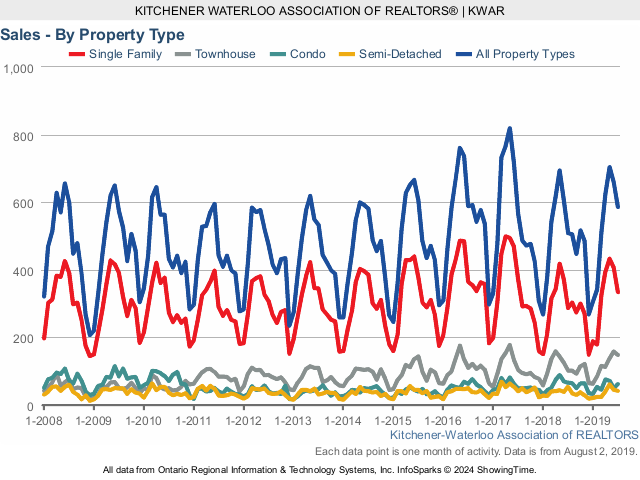
 KITCHENER-WATERLOO, ON (August 6, 2019) ––586 residential properties sold through the Multiple Listing System (MLS® System) of the Kitchener-Waterloo Association of REALTORS® (KWAR) in July, representing an increase of 15.1 per cent compared to the same month last year.      
 
Home sales in July included 322 detached (up 16.4 per cent), and 62 condominium apartments (down 6.1 per cent). Sales also included 148 townhouses (up 45.1 per cent) and 42 semi-detached homes (down 22.2 per cent). 
 
“Home sales continued their strong momentum from last month,” says Brian Santos, KWAR President. “On a year-to-date basis we’re seeing sales have increased slightly over last year.”
 
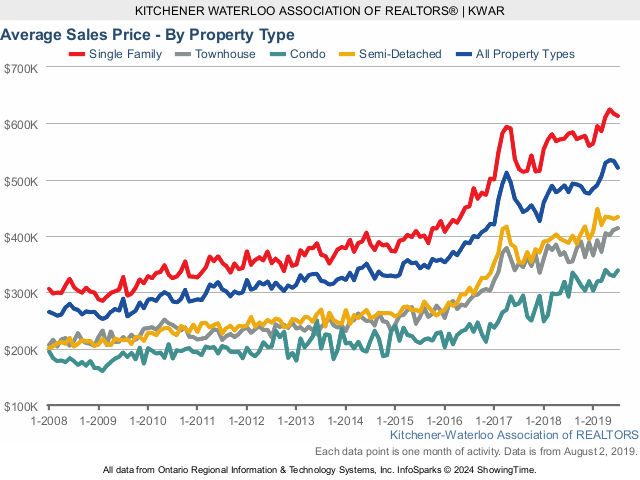
The average sale price of all residential properties sold in July increased by 9.3 per cent to $521,101 compared to July 2018. Detached homes sold for an average price of $613,244 (an increase of 5.4 per cent compared to July of last year. During this same period, the average sale price for an apartment-style condominium was $339,137 for an increase of 15.9 per cent. Townhomes and semis sold for an average of $414,062 (up 17 per cent) and $434,136 (up 11.9 per cent) respectively.
 
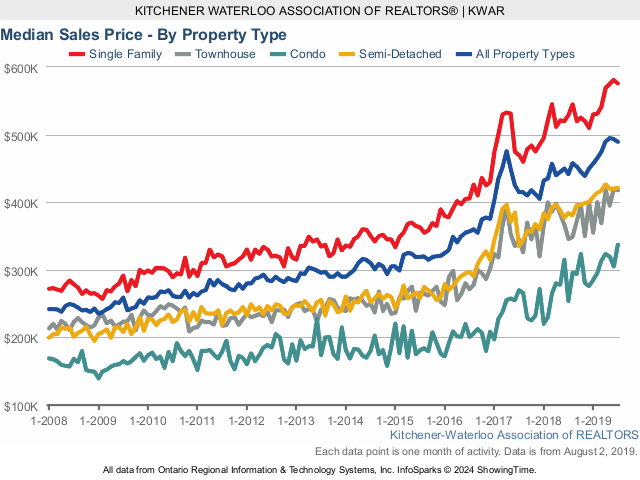
The median price of all residential properties sold last month increased 10.8 per cent to $489,450 and the median price of a detached home during the same period increased by 8.8 per cent to $575,750
REALTORS® listed 844  residential properties in K-W and area last month, an increase of 12.8 per cent compared to July of 2018, and an increase of 10.4 per cent in comparison to the previous ten-year average for the month of July The total number of homes available for sale in active status at the end of July totalled 863, a decrease of 8.7 per cent compared to July of last year, and well below the previous ten-year average of 1,467 listings for July. Months Supply of Homes for sale stood at 1.7 months in July, which is 15 percent lower than the same period last year.  
 
“The temperature is matching the market,” says Santos. “we’re continuing to see strong consumer demand that is making for a busier than normal market for the middle of summer.”     
 
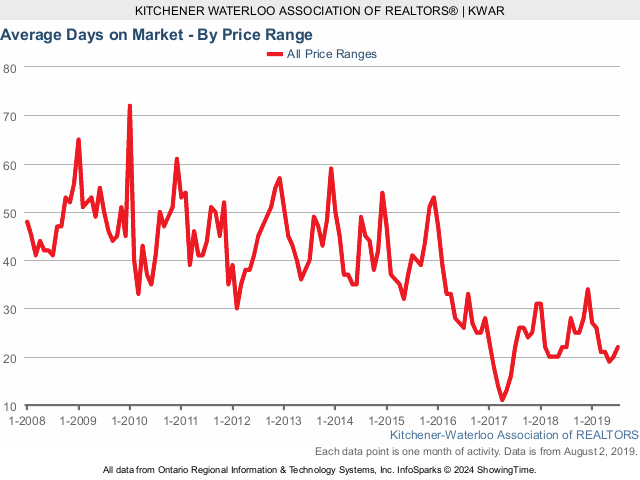
The average days it took to sell a home in June was 22 days, which is the same number of days it took in July 2018.
 
Historical Sales By Property Type
Months Supply of Homes for Sale
Historical Median Sales Price – By Property Type
Historical Average Sales Price – By Property Type
Historical Sales - By Price Range
Average Days on Market

Sunday, July 21, 2019

Factors that Determine Your Home's Value

Contact me for a Free Home Value Report at www.kimlouie.net


There are many factors that can affect the market value of your property, ranging from home improvements to the mood of the seller. All of this is a lot to internalize, but you can make an informed decision while pricing your home if you tackle these issues one at a time.

1. Location Your home’s proximity to public transportation, train stations, shopping facilities, schools, etc., plays an import factor in determining your property’s market value. Every area has a high end and a low end. The market value of your property is affected by that reality. People that purchase homes in “lower end” areas expect to pay less than they would if they bought the same home in a “higher end” neighbourhood.

2. Features One of the key factors in your home’s value is the features it provides. For example, some house styles are more popular with buyers than others. The age and size of your home compared to other available properties also plays a part in affecting your home’s value.

3. Condition Potential buyers will take into account the condition of your home in deciding if they want to buy it and how much they are willing to pay for it. A home in immaculate condition has a much higher potential for a top dollar sale than one that is lacking the most basic routine maintenance.

Experienced buyers look for important conditions like paints, floor coverings, walls, ceilings, floors, doors, and windows. Buyers may also pay close attention to the plumbing, electrical work, repairs, bathrooms, kitchen, and so on.

4. Home Improvements Most people think that home improvement is a sure way to increase the value of a home. Major home improvements are unquestionably important factors that affect property value. Improvements like room additions, bedrooms, bathrooms, kitchens and other items like floor tiles, swimming pools, etc., can increase the value of your home. However, it only matters what those improvements are worth to the buyer.

5. Market Conditions When the market is flooded with similar properties for sale and real estate buyers are scarce, you can expect to sell your home for less than you would if there was a shortage of supply and lots of eager potential homebuyers.

6. Seller Motivation Seller motivation is also a major factor which affects the offer price made by the buyer. For example, if you bought a home in a new area you may be willing to accept a lower price to quickly complete the sale of your current home.

7. Marketing  The marketing plan that your agent executes on your behalf will determine the amount of interest that is shown in your property. Your agent’s level of skill and expertise in the negotiating process will affect the amount of money you’ll be able to get for your home. Many people put more thought into what they’ll have for dinner tonight than who they will trust to market their most valuable asset. Don’t make the same mistake. 

Saving Money for Your First Home

Contact me for a Free Home Value Report at www.kimlouie.net


When it comes to buying your first home, a big part of that decision should be based on what your current financial position is and the impact a home loan will have on your finances and lifestyle.

For many first-time homebuyers, saving what is required for a down payment can seem overwhelming. However, sometimes saving for a down payment is as simple as managing your budget differently.

Start with a goalOne of the best ways to save is to have a goal. It will keep you motivated and give you something to work towards. For example, you may choose to save a 10% deposit plus expenses (usually 5%) for your first home. But the more you can save, the better off you’ll be. Find out how much you need to put aside in order to reach your savings goal.

Create a budgetWrite down how much money you bring home each month; write down the payment amounts for each of your monthly bills; subtract your expenses from your income to determine how much extra money you have each month.

Develop a culture of saving Your first priority should be developing a culture of saving. This not only helps you in budgeting and planning for the future but also satisfies banks and other lending institutions that you have a clear commitment to save.

When you go shopping, ask yourself if you really need the item you are thinking of buying. If you don't need it, don't buy it. Put the money into your savings account instead. Remember that small amounts of money can add up to large sums over time.

Start an automatic saving plan Make saving automatic by setting up an automatic savings plan at your bank to regularly move a specific amount of money directly from your chequing account to a savings account. You’ll be surprised at how much you can save and how quickly the “pay yourself first” approach adds up.
  
Borrow from your RRSPs If you qualify as a first-time homebuyer, you may be eligible for the government's Home Buyers' Plan (HBP). This allows you and your spouse or partner to withdraw up to $25,000 each from your Registered Retirement Saving Plans (RRSPs) to add to your down payment or to cover purchase-related costs.

Best of all, you don't have to pay income tax on the funds, as long as you repay the total amount to your RRSP over the next 15 years. The repayment period starts the second year following the year you made your withdrawals. If the full $25,000 is withdrawn, the minimum annual repayment would be $1,666.

Take a holiday from tax If you open a new Tax-Free Savings Account (TFSA), you won’t pay any tax on earnings, which will help you compound your savings. You can contribute up to $5,000 a year to a TFSA, and save for anything you like, tax-free.

Review your mortgage options Once you make the decision to purchase a property, the next choice is the type of loan to suit your budget. The two most common types of loans are the variable interest rate loan and the fixed interest rate loan. 

You can now choose to pay back your mortgage over 25 or 30 years, instead of the traditional 20-year amortization period. This means you will pay more interest over the long term, but you can reduce monthly payments to get into your starter home. You can always change this later, once your income rises and you can pay your mortgage down faster.

Get into a starter house Try to be as flexible as possible when choosing your first home. Unless you’re status conscious, your first home doesn’t necessarily have to be your dream home. You could settle for a starter home, which you can afford with a small down payment and easy mortgage installments. There are plenty of lower-priced houses out there in need of repair, with some "Do-It-Yourself" projects where you can add more value to the house. Be careful not to buy a place where the cost of repairs will eat up any profits you might make when you sell.

In just a few years you will build enough equity in your starter home to make it easier for you to sell and move into your dream home.

Buying your first home is an exciting process. After all, your home could be the largest asset you’ll ever own. Being able to finance most of its cost will take a load off your back in the future.