Wednesday, April 17, 2019

Choosing Outdoor Lighting to Improve Your Home's Curb Appeal


 For a Free Home Value Report, CLICK HERE
 
Well-executed exterior lighting can enhance the architectural detail of your property and makes your home look beautiful in the evening adding an abundance of curb appeal.   Aside from aesthetics, good exterior lighting can give you and your guest’s added security and peace of mind when entering and leaving your home.
Much of the success of exterior lighting depends mainly on its design. Professional lighting designers often talk about “moonlight effect.” That’s a naturalistic look that features light no more intense than that of a full moon, but still strong enough to make beautiful shadows and intense highlights.
A well-lit front entrance enables you to greet guests and identify visitors. Wall lanterns on each side of the door will give your home a warm, welcoming look while assuring the safety of those who enter.
Install a single fixture above the garage door to provide lighting for safety and security. Consider installing a motion sensor on these fixtures or a photocell that turns the lights on at dusk and off at dawn to save energy.
Another important factor is making your home secure and safe from intruders and animals. Good lighting around the entire perimeter of your home can be a deterrent in itself. Illuminate any side of the house that would otherwise be in shadows. Spotlights installed on your eaves will accomplish this, or, for a more dramatic look, consider ground lights pointed up to graze your walls.
Steps, paths, and driveways should be illuminated to make sure family members and guests are able to move about easily and safely after dark. You can install path lights or post lanterns or attach lights to the side of the house.  Low-level path lights, which spread circular patterns of light, will brighten your walkway while highlighting nearby flower beds, shrubs and ground cover. Low-level path lights can also be used to define the boundaries of long driveways.
If you have added exterior features like a swimming pool, an exterior porch or entertaining space, ensure these areas are well lit as well.
Choose lighting fixtures that look beautiful, but also throws light a good distance away from your home. This will help illuminate dark areas and aid your vision to see outside from inside your home. If you have a large property, floodlights installed on the corners of your home will help throw light further than average wall sconces on the exterior of your home.
Another consideration to keep in mind is to select outdoor light fixtures that are energy efficient and made of durable material to suit the harsh outside temperatures during the hot summer days and cold winter nights.  In most cases, fixtures made of cast aluminum are a very durable option.

Contact me at www.kimlouie.net to chat about real estate!

9 Tips to Help Sell Your Home in a Slow Market


For a Free Home Value Report, CLICK HERE


Selling a house in a slow real estate market can be difficult. In times like these, it's not enough to simply list your home and wait; you actually have to sell your home. No one really wants to sell anything when the market is bad, however, it's not impossible to sell your house in these conditions. It just takes a positive attitude and a different kind of game plan.
Even though the market's not favourable to sellers and widespread economic recovery may be months, even years off, there are a number of tactics available to increase the likelihood of a sale.
1. Know your market
One of the most important things you can do to get your house sold is to learn your market, the value of your property and your competition. Most sellers operate in the dark, simply offering the property for the price they want, without regard to what other homes have sold for and are currently selling for. Undervaluing or overpricing your home can cost you tens of thousands of dollars.

2. Price your home right
With homes sales slowing and prices plunging, there's little doubt that selling for a good price in today's market is going to be tricky. The median existing-home price dropped more than 7% compared with the same month last year, according to the National Association of Realtors. So if you try to ask as much for your property as your neighbour got a year ago, you're going to turn off potential buyers. Instead, price your home conservatively by looking at similar houses currently on the market. Also, look at the homes that aren't selling. Chances are those owners priced their homes too high.
If you really want to stimulate a sale, you should underprice your property by just a little. Trimming the price by a few thousand dollars can generate more foot traffic and create a buzz. 
3. Make your home presentable
Keep your house looking good at all times, repair things that are broken, and replace things that are rundown. Add a fresh coat of paint (neutral colours preferred), freshen up landscaping, trim trees, clean up clutter and remove personal items, so that prospective buyers can picture themselves in the home rather than seeing you there.
To guarantee a quick sale, consider using a professional home staging service. Your property must make a strong, positive impression. Staging a home is the cheapest way to make a house look different from your competition so it becomes the most memorable one that the buyer saw. 
4. Market your home aggressively
In addition to using the multiple listing services, advertise in local papers and be sure to include beautiful photos. Each photo should showcase something interesting and unique about the property.
Place numerous signs and flags in front of your home so that your house is easily seen. Consider placing a well-designed flyer in front of the house. Make sure the flyer has great photos of the property from all angles, inside and out, as well as a link to a web site where people can take a "virtual tour."
5. Be flexible with showings
It only takes one Buyer to get your home sold. Don’t make your Realtor feel as though their request for a showing is an inconvenience.
6. Play up your home’s best features
If you have fireplaces, make sure that you have fires burning so that there are a beautiful warm glow and the sound of crackling. If you have a gourmet cook’s kitchen, have some great-smelling treats baking in the oven. Turn on soothing music. Set all lights and lamps if the home looks dark or feels heavy. Lighting is crucial. Do the same as if you were having a formal dinner party- the house will certainly sparkle. 
7. Offer buyers incentives
A low price may be incentive enough for some buyers, but others might be holding out for something more. This is where creativity can really take over. Perhaps you can throw in a new set of kitchen appliances, or a 3-day paid vacation in Mexico. There are a ton of incentives that speak to the heart of the buyer; be creative and see which one speaks to yours.
8. Offer flexible terms
Often, the best way to sell a home more quickly in a buyers market is to adjust the terms of the sale instead of the price. While it may sometimes be necessary to adjust the asking price downward or to negotiate a lower price with the buyer, sometimes offering help with closing costs or extended settlement date, will go a lot further.
9. The first offer rule
If you get an offer within the first few weeks, the tendency is for sellers to try and hold out for a better offer. This is generally a mistake. The biggest fish usually bite first, so keep in mind that your first offer will often be your best. 

Lastly, keep a positive attitude!
Contact me at www.kimlouie.net to chat about real estate!

Freshen Up Your Home for Spring!


 For a Free Home Value Report, CLICK HERE
 
Spring season invites changes to your home with fresh decorating ideas. Now that we have a sneak peek at spring, it is the perfect time to kick off the season by adding a little freshness to your home. Here are a few tips that will have you and your home feeling renewed in no time.
Pare down and organize
No need for excess, spring is the perfect time to thin things out. Start with closets by pulling out clothes and shoes you have not worn in a while, and donate them so that someone else may get some joy out of the items. The same goes for books and magazines and anything else that's been accumulated. Remember to tackle the pantry, fridge and medicine cabinet too, and discard or recycle what is no longer needed.
Once everything is pared down, organize what is left. Baskets, decorative boxes, and bowls are a great way to keep a sense of order to everyday things. After a good clean up, your space will get an instant lift and you will feel refreshed and lighter too.
Rotate art and rearrange furniture
Separate art into summer and winter piles. Hang the lighter, pastel colours for spring and summer, and put the deep, oil paintings in storage. Every six months, rotate your pieces. This way, you enjoy your art with new vigor, and it’s something you can do in minutes.
Simply switching the placement of a sofa set, or repositioning the TV can make you feel like you have a whole new room. If you don't have much room for movement, change and update the smaller things, like pillows, throws, and lamps. Remember, even a small change will do you good and help brighten up your home.
Give your home new colours
Nothing brings the feel of spring in like the colours and textures of the season. Keep a spring garden in mind and pick the colours and flowers you like the most from the spring garden colour palette. Choose the ones that look best with your overall colour schemes that are already in place.
Nothing says spring more than fresh flowers. Make sure to be consistent with creating arrangements. Choose a colour scheme, like all white, instead of mixing bouquets. Use the same type of flower in one glass container with a beautiful white satin or grosgrain ribbon wrapped around it.
The infusion of brighter colours and fresh flowers and plants reinforce your seasonal changes and give your home a new relaxing look and feel.
Brighten up the windows
New updated window treatments can make one of the most profound changes to the look and feel of a room. Spring calls for delicate colours and soft fabrics. Choose something light and airy, like a soft drapery or sheer window shading.
Let the sunshine in, and if you are worried about privacy, can place room-darkening blinds that you can adjust for a look and feel that is tailored to your unique needs. In addition, sunscreen window shades are especially popular options that will prepare your home for the glare of the sun and the heat of the upcoming summer.
Soothe the senses
Spring is not only a colourful season but a fragrant one too. Bring the aroma indoors. Scents have a profound effect on mood.  Infusing scent into your décor with diffusers, candles, fresh cut plants/flowers, or incense can change the overall feeling of a space. Purchase an inexpensive bouquet of flowers.  Split flowers up by colour, and place each bunch in small vases around your home.
Update accessories
Just as you’d add a scarf or necklace to enhance an outfit, do the same with your home. Dress your home like you would yourself. Look for great accent pillows in bright colours. Put away the winter throws and drape light, bright throws on your sofa. Pick out spring-hued vases or candles to boost a cocktail or dining room table.
Beautify your bedroom
Bright new bedding can do wonders for your personal space. Tuck away the heavy, winter flannel comforter and pull out crisp linens with a decorative bedspread. Bring in the spring with floral-designed spreads or colourful solids. Don’t forget accent pillows for added style and comfort.
Contact me at www.kimlouie.net to chat about real estate!

Friday, April 5, 2019

Home Sales Slide for Second Month in Waterloo Region

For a Free Home Value Report, CLICK HERE


There were 511 residential sales in March through the Multiple Listing System (MLS® System) of the Kitchener-Waterloo Association of REALTORS® (KWAR), a decrease of 5.7 per cent versus the same month last year, and down 7 per cent compared to the previous ten-year average for March.

“The activity on detached homes continues to be strong,” says Brian Santos, KWAR President. “But the average number of sales in March was brought down by fewer semi-detached, townhomes and condos. I think this can be credited to the lack of inventory and options buyers have in those segments of the market.”

Total residential sales in March included 325 detached (up 3.2 per cent), and 45 condominium apartments (down 11.8 per cent). Sales also included 116 townhouses (down 14.7 per cent) and 25 semi-detached homes (down 37.5 per cent).  

The average sale price of all residential properties sold in March increased 3.4 per cent to $505,855 compared to March 2018.  Detached homes sold for an average price of $585,668 an increase of 0.8 per cent compared to March of last year. During this same period, the average sale price for an apartment style condominium was $320,857 for an increase of 7.5 per cent. Townhomes and semis sold for an average of $372,003 (down 1 per cent) and $422,360 (up 6.4 per cent) respectively.

The median price of all residential properties sold last month increased 3.9 per cent to $474,900, and the median price of a detached home during the same period decreased by 0.8 per cent to $540,400
“Sale prices across Kitchener-Waterloo and area experienced increases in March,” says Santos. “While pundits are focussing on affordability challenges, this also reflects the greater attribute of livability and how Waterloo Region offers a great quality of life.”

REALTORS® listed 797 residential properties in K-W and area last month, a decrease of 4.8 per cent compared to March of 2018, and a decrease of 4.5% in comparison to the previous ten-year average for the month of March. On the other hand, the total number of homes available for sale in active status at the end of March totalled 819, an increase of 5.4 per cent compared to March of last year, but still well below the previous ten-year average of 1,371 listings for March.

Santos contends restrictions brought on by the B-20 mortgage stress test have pushed buyers into lower price points. “It’s difficult for buyers who are trying to find a house under the $500,000 mark – because demand is strongest in that range.”

Contact me at www.kimlouie.net to chat about real estate!

Friday, March 22, 2019

6 Things to Avoid Before Buying a Home


  For a Free Home Value Report, CLICK HERE
Buying a home is not an impulse buy. In most cases, you will have a few months notice before you actually go through with the sale. Planning ahead is crucial particularly if you don't have extensive financial resources. Since mortgage lenders will be sizing up your finances carefully, don't give them any reason to reject your application.
You never know what effect today’s actions will have on your mortgage application in three or even six months. Even something as simple as transferring money from your savings to your chequing account can negatively impact the mortgage process. So here are some suggestions on things you should avoid before buying a home:
1. Do not make any major purchases
Don't invest in any major purchases. Cars, weddings, jewellery, furniture, and electronics can all wait until you're settled in your new home. When you make a major purchase, you limit the amount of money available for your down payment and decrease the amount of liquid capital in your name.

If you do have to make a major purchase before buying a home, you might want to put it on a low-interest credit card until after your mortgage application is approved. Sometimes you can't control what life throws your way but think carefully about your options before making a decision.

2. Don’t move money around
When a lender reviews your loan application for approval, one of the things they are concerned about is the source of funds for your down payment and closing costs. To do so, they will request statements from all of your accounts that contain liquid assets.
Moving your money around, even if you are consolidating your funds to make it "easier," could make it more difficult for the lender to properly document and measure your finances. So leave your money where it is until after closing.
3. Do not make large investments
It is also not recommended to make investments just before buying a home; again, you're decreasing the liquidity of your assets. If you've come across a new stock in which you'd like to invest or if it's a great time to buy bonds, wait until after you've settled the finances on your home.

Furthermore, you'll have to disclose all of your finances before buying a new home, which means accounting for every withdrawal and deposit in all of your accounts. This can get quite tedious, especially if you're trying to dig up cancelled cheques for the new home theatre or HDTV you just had to have three months ago.
4. Do not change your bank 
Changing banks is always a hectic ordeal, so don't do it before buying a home. You'll have to provide information about previous accounts that are now closed, and therefore inaccessible. And if you diversify your money too much in money market accounts, savings accounts, chequing accounts, and other places, you'll have a harder time with the disclosure process.

If you're frustrated with your bank and want to change, tough it out a little longer and switch after your mortgage is approved and you've set up shop in your new home. This will save you hours of headaches and frustration.

5. Do not apply for a new credit card or line of credit
Even though the inquiry won’t hurt your credit too badly if you already have a good credit score, the additional credit card will cause the lender to question your financial stability for buying a home.
6. Do not change your job unless absolutely necessary
Try not to change jobs. Your employment is a key factor in the mortgage approval process, and if you can't show steady employment, you might be denied. Of course, you can't help matters if you've just been laid off or an opportunity presents itself that you can't pass up.
This could become more difficult if you become self-employed. In most cases, lenders want to see at least two years of self-employment before they will approve you for a loan. So if you can, wait until after buying a home to become self-employed. For part-time workers, changing jobs creates unpredictability in the number of hours you will work so the lender cannot determine your gross income to qualify you for a loan.

If you're going to change jobs before buying a home, wait another six months before going ahead with the real estate transaction. This gives you an opportunity to establish employment and to show a steady income from a single employer. This looks much better on a loan application than a long list of recent employers.
As mentioned above, there will be times when you can't avoid all of these things before buying a home, but know that it's in your best interests to wait until the dust settles. The goal should be to move into your new house with as few obstacles as possible.
Contact me at www.kimlouie.net to chat about real esate!

Home Theater? Here are some Decorating Tips!


 For a Free Home Value Report, CLICK HERE
 
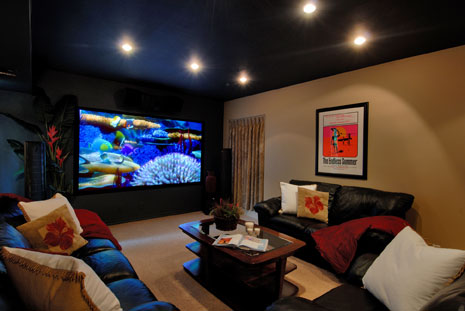
A home theatre has quickly become a must-have for practically every family. From the simple family room setup to a much more elaborate theatre-seating wonder, today’s home theatres aren’t just for the wealthy anymore.
The décor of a home theatre will eventually influence how well the room functions as an entertainment space as well as how it shows when the lights are turned on. Creating a functional and beautiful home theatre is easy to do on any budget.  Here are some ideas for creating a home theatre for all to enjoy.
Start by arranging the space. Choose an easy-to-clean surface or a dark colour carpet for the flooring, and select a dark colour for the walls and ceiling.
A home theatre would not be complete without its supporting cast, the furniture. If you plan on having a couch in your home theatre, get a curved sectional. Since the optimal viewing in a movie theatre is the centre seat, a curved sectional will simulate that effect for everyone viewing your television.
If you have a smaller space or prefer a more intimate area, purchase two recliners in dark leather or other fabric. A simple end table can serve as a shared table between the two chairs. Select comfortable and soft furniture which give luxury while absorbing sound waves to improve audio quality within the room.
Arrange the furniture for best viewing for everyone. If you have an HD television, your seats should be as far back as 3 to 4 times the width of the screen. This provides optimum picture quality and your guests won’t be straining their neck or eyesight to watch the screen.
Secondly, consider the lighting. You never want to be in a completely dark room when watching a movie as this can be a hard strain on your eyes. Use wall sconces or different dim background lighting at a very low level while watching the TV.
Another typical visual task in the home theatre is entertaining. So you need to have a layered lighting approach. Add some accent lighting in the room, some general lighting and some decorative lighting.  Remember to use separate controls for each of these layers so that you can change the look and the aesthetic feel of the space based on function.
No home theatre is complete without refreshments. If space allows, install a built-in or freestanding bar. A complete home theatre bar should include a microwave and mini refrigerator stocked with water, juices and your preferred drinks.
If your budget allows, consider adding acoustic wall treatments to balance the acoustic properties of a room. You want to be able to crank up the volume while watching your favourite movie without disturbing other people in your home. There are many commercial products available and you can even buy ready to install treatments.
Most wall or ceiling mounted treatments are really just a wooden frame filled with sound absorbing or diffusing material. The material is then wrapped in an attractive sound absorbing fabric of your choice. You can also hang wall treatments from your ceiling to help control floor to ceiling reflections.
Finally, when selecting the focal point of your home theatre — the equipment, keep in mind that you can easily find speakers that are installed into the walls for a clean, less cumbersome appearance. The exteriors of these in-wall speakers can be painted and treated to blend seamlessly. If a drop-down projection screen isn’t in your budget, large standard television with surround sound will do nicely. Add a tuner and some speakers for maximum sound quality.
A home theatre is a fun, relaxing place for families to spend time together as well as to entertain. The décor of the room should be about comfort and subtly allow you to enjoy favourite movies or programs in the welcoming retreat of your own home.
Contact me at www.kimlouie.net to chat about real estate!

The Value of Using a Mortgage Broker


 For a Free Home Value Report, CLICK HERE
 
Finding the right home may seem like the hard part of a real estate transaction, but in reality, getting the best financing can be much harder. This is partly because we have so many options nowadays for mortgage loans and so many places to find them. A mortgage broker or your local bank can provide your options clearly. They will be armed with what you want in terms of the loan term, ideal rate, targeted monthly payments and other items that you may not have considered. If you're smart, you will talk to them before you decide on purchasing your home so you really know your price range.
Using a mortgage broker is by far the best way to go about finding and arranging the very best mortgage to suit your specific needs. Trust in a specialist that knows how to package your application, what pitfalls to look out for, and how to protect your interests when dealing with the banks. Sure, you might get the same rate that a broker could get for you, but what you won’t get is all the facts about the mortgage that you have shopped for.
A mortgage broker/specialist navigates you around those banks with mortgages that appear to be the best deal out there, but fall short of your expectations. Brokered mortgages may not be as “flashy” on the exterior, but they will have all the “nuts and bolts” built into them to protect you from unforeseeable circumstances that often arise.
The benefits of using a professional mortgage broker include:
Reduce your stress and frustration. There are dozens of lenders from which to choose, so why not let an expert handle the application process for you? These days the forms and other data that are required for a loan application can be quite complicated, so it is wise to hand the entire process over to a professional.
Fewer complications. A seasoned mortgage professional will have years of experience, and that will help you navigate the tricky loan application waters that lie ahead. Let a broker’s know-how work to your benefit.
Help you get the best deal possible. Although you may be tempted to apply for the mortgage on your own, by hiring a professional you are assured of getting the best interest rate, the best payment plan, and the best deal in general.
Save your time. The most valuable of all commodities. A broker has the experience to make sure you get the best package for your individual needs.
Real personalization. Since the mortgage broker works for you (not the lenders), he or she offers you unbiased advice and helps you select the mortgage that's absolutely right for you. You get the personal service you just cannot get from a bank.
Service at no cost. Not only will a broker obtain the best mortgage rate for you, but broker services also cost you nothing.
Contact me at www.kimlouie.net to chat about real estate.