Wednesday, January 16, 2019

Does Condo Living Work for a Family?


 For a Free Home Value Report, CLICK HERE
 
When looking to buy a new home for their families, most people don’t automatically think purchasing a condominium is a viable option for them.  Part of the reason for this thinking is the widely held misconception that a condo lifestyle is primarily for young couples, seniors and singles. It is a North American myth that families need big houses to thrive and that children need a lot of space to develop well. None of this is supported by research evidence.
Paradoxically, detached houses have become bigger and bigger at a time when they have become emptier and emptier. Families have fewer children and, in a majority of Canadian families, both parents work and during the day most children are in school.
Families that live in large houses actually have less time together because each family member spends most time alone in his or her room. Nowadays, kids have a cell phone, television, computer, Internet, and a game system in their own bedrooms—and this is where they spend most of their time. In large houses, some parents now have to phone or text their children to get them to come down to eat.
Many families may look at high-rise complexes and multi-units and think that they are not suited for family lifestyles. The truth is that condominiums are a feasible option for anyone who wants to own property. In fact, many condos may provide more, not fewer, opportunities for children, including:
Sociability. Children living in a condo, especially in a high rise, meet people on a daily basis in corridors, elevators, lobby, and parking. They can learn to interact with others, how to be polite or considerate. They may become less shy and more sociable.
Diversity. Condos generally have a diverse population, especially in large cities, so that children are more likely to meet people from all ages and various backgrounds.
Peers. There are several other children around in the same building. This situation can help them make new friends.
Physical Activity. Many condos have a pool so that children can have fun while exercising. As well, many condos are located near a playground or green space.
Living in a condo may also offer many advantages for parents with small children, such as:
Easier Supervision. It may be easier to supervise children’s social activities in a condo because it is a fairly self-contained vertical neighbourhood or a townhouse area that is quite compact. It’s easier for parents to keep track of their children’s whereabouts.
Sociability. Mothers at home with small children nearly always meet other mothers in the same situation. In some condos, enterprising mothers exchange services and babysitting, arrange meetings or go to a nearby park together.
Car Pooling. Carpooling for schools can more easily be arranged once parents know each other.
Similarly, condos are ideal when a mature couple or person wants to help aging parents where adult children may buy a suite for their parents in their building, or in an adjacent building.
A condo home is like a home anywhere else: location counts. Parents or would-be parents should look into the surrounding neighbourhood just as people do when they buy a detached home. Some areas are better than others and the same can be said about schools. It is recommended that you visit the neighbourhood school to make sure that your children can attend it. It's not always the case in some areas that have seen a lot of recent development.
Condo living does not mean that parental supervision is not necessary. For instance, small children should never be left alone on a balcony or terrace on floors above ground level. They could climb and fall. Neither should children be left alone in elevators. Unless a building has cameras in the elevators, children below the age of 14 should probably always be accompanied by another person. Underground parking areas are not a safe place for a child alone.
In other words, parents have to exercise the same caution and vigilance over their children that they would in other living environments. They only need to adapt their vigilance to the type of condo they live in.
We are seeing a great deal more in the way of multi-family developments in both established and newer communities that offer close proximity to schools, libraries, pools and arenas, amenities that are obviously priorities for young families.
Home builders are also taking into consideration some of the more obvious requirements like more bathrooms, and bedrooms, and have grown more cognisant of the little things that families appreciate, like sound attenuation, extra phone jacks, and cable outlets. With many of those important details now being looked after by builders and developers, families don’t have to worry about it and can instead focus on what type of condominium development would best work for them.  Most tend to lean towards a townhouse style, with many units now offering sizes and plans similar to single-family homes.
Contact me at www.kimlouie.net to chat about real estate!


How To Qualify for A Mortgage!


 For a Free Home Value Report, CLICK HERE
 
Many people wonder if buying a home is really within their reach. It often seems like a daunting purchase for the first time buyer. The good news is that with the large variety of options available today, it has never been easier to secure a mortgage.


Mortgage lenders assess a variety of criteria when considering mortgage applications. Most lenders look at the following factors when determining whether you qualify for a mortgage loan.
One of the first questions a lender will consider is how much of your total income you’ll be spending on housing. This helps the lender decide whether you can comfortably afford a house.  Mortgage payments for principal, interest and taxes generally should not exceed 30% of your gross monthly income.
A lender will then look at your debts, which generally include house payments as well as payments on all loans, charge cards, child support, etc., that you make each month.
A history of steady employment, usually within the same job for several years, helps you to qualify. However, a short history in your current job shouldn’t prevent you from getting a loan, as long as there have been no gaps in income over the last two years.
Good credit is also very important in qualifying for a loan, and the lender will want to know that the house is worth the price you plan to pay.
Down payments are not always required as there are mortgage programs that provide 100% financing for qualified purchasers.  If you have a down payment of 20% or more of the purchase price, this is known as a "conventional" mortgage, and the mortgage lender will not require default insurance.  However, with mortgage loan insurance to cover potential default of payment, you may be able to qualify for a mortgage with a down payment of as little as 5%.
When budgeting, also consider other monthly-related expenses such as condominium fees, heat, hydro, water, property tax, insurance and household maintenance.
Even if you can’t buy a home right now, home ownership is possible. If you make it a serious goal and plan for it, within two years you can probably overcome most or all of obstacles that usually face first time buyers.
Contact me at www.kimlouie.net to chat about real estate!
Tips for Creating the Ideal Basement Apartment


For a Free Home Value Report, CLICK HERE


A basement apartment can be a good investment.  But nowadays, any old basement apartment just won’t do. If you want to have a successful lower-level living space, you need to impress potential renters right from the start.

Separate Entrance
It goes without saying, a basement without a separate entrance is no good. This is an expensive addition If you have to do it yourself, so look for a property that already has one.

High Ceiling
Ceiling height plays a huge role in the perception of space. The ceiling height should be no less than seven feet for more than 70% of the space, the higher the better. Using big pieces of art on the walls and Ceiling to floor curtains  can give the impression of high ceilings. The idea is draw the eye up and therefore giving the illusion of height.

Full Kitchen
A full kitchen that includes a dishwasher is the best way to impress and command a high price. Renters do not have to scarify functionality just because they live in a basement. Providing Proper ventilation is essential both for safety and comfort and do not compromise on kitchen storage.

Separate Laundry
Even if space is tight, providing tenants with a washer and dryer that is exclusively their own is a huge plus, you can hide the machines in a closet or cupboard to save space. In fact, it can really make or break a rental agreement. If the laundry units can only be shared with the upper floors of the house, it’s not the end of the world. But, keep in mind, a separate laundry will almost certainly fetch you a higher price.

Fireplace 
A gas fireplace is not a must have, but it sure is a ‘nice-to-have’. Basements have a reputation for being cold. While you shouldn’t have any heat problems (as long as you have the right insulation and subfloor), a gas fireplace will impress renters and make the space feel cozier.

Bath and Shower
Basement apartment bathrooms should have a toilet, sink, tub and shower. Having either a tub or a shower isn’t ideal. A shower without a tub won’t appeal to families, and a tub without a shower is just plain inconvenient for a lot of people. In most cases a shower/tub combo will do the trick.

Heated Floors
Like a fireplace, heated floors are an added bonus that can make a basement apartment much more appealing. Floor heating the entryway and bathroom are sufficient enough, if you don’t want to go to the trouble or expense of doing the entire space.

Updated Finishes
A basement apartment does not have to be plain! Updated hardware, light fixtures, faucets, and any other fixtures should be modern and stylish.

Open-Concept Layout
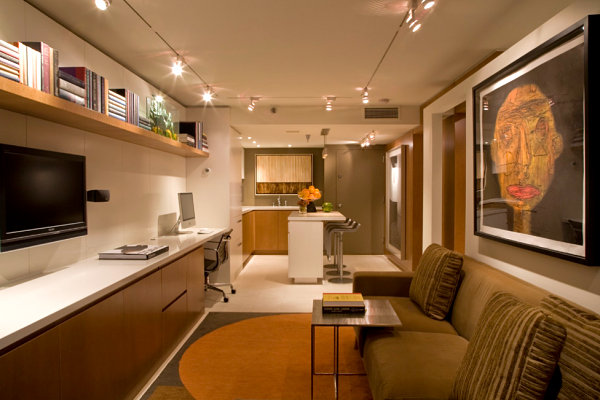
Open-Concept Layout  that combines the kitchen, dining room, and living room in one shared space. work extremely will with a small basement apartment. It increase the view and natural light and make the space look larger and better for entertaining. A half high decorating partition can be used to separate the sleeping area to allow natural light and provide privacy.

Recessed Lighting
Since ceiling height is often at a premium, recessed lighting is always best. Chandeliers and pendants can look nice, but recessed lighting will get you the best bang for your buck, and it will look great. If you want to have a pendant over an island, or a decorative chandelier somewhere, go for it, but don’t do it at the expense of recessed lighting throughout.

Contact me at www.kimlouie.net to chat about Real Estate!

Tuesday, January 8, 2019

Real Estate Market Stabilizing in Waterloo Region


For a Free Home Value Report, CLICK HERE


There were 5,823 residential homes sold through the Multiple Listing System (MLS® System) of the Kitchener-Waterloo Association of REALTORS® in 2018, a decline of 11.1 per cent compared to 2017.

With 263 transactions taking place last month, December’s home sales were down 13.2 per cent from this time last year and slightly behind the previous 10-year average of 268 sales for the month of December. 

The combination of rising interest rates and the mortgage stress test definitely took some steam out of the market relative to what we saw in the previous two years. These types of impediments are most impactful on first-time as well as other buyers entering the housing market.

Total residential sales in 2018 included 3,355 detached (down 16.2 per cent), and 1,553 condominium units (up 6.4 per cent) which includes any property regardless of style (i.e. semis, townhomes, apartment, detached etc.). Sales also included 417 semi-detached homes (down 23.6 per cent) and 431 freehold townhouses (down 7.7 per cent).   

The average sale price of all residential properties sold in 2018 increased 3.4 per cent to $483,537 compared to 2017. Detached homes sold for an average price of $575,412, an increase of 4.8 per cent compared to 2017. During this same period, the average sale price for an apartment style condominium was $304,676 for an increase of 12 per cent. Townhomes and semis sold for an average of $373,307 (up 5.5 per cent) and $396,391 (up 4.7 per cent) respectively. 

The median price of all residential properties sold last year increased 3.6 per cent to $445,304, and the median price of a detached home during the same period increased 6.1 per cent to $525,000.

The average time it took for a home to sell in 2018 was reflective of demand continuing to outpace supply. The number of months of inventory remained at under 2 months of supply throughout the year (3-4 months is historically normal for Waterloo region) and the average days to sell in 2018 was 24 days, compared to 19 days in 2017 and a previous 10-year average of 40 days.  

While we may be seeing fewer buyers coming down the 401,  they are still a component of the Waterloo region real estate market, just not as speculative as what we saw in the previous two years. 2018 continued to be a seller’s market in the region with stable sales activity and homeowners realizing solid gains in their property values.

Even though prices increased more moderately overall compared to the last two years, they continue to respond to strong demand and the desirability of our area. For those would-be buyers who have been sitting on the fence these past two years, home prices are only getting further out of reach, as supply remains low and demand strong.

Dollar volume of all residential real estate sold last year decreased 8 per cent to $2.8 Billion compared with 2017. 

While the majority of residential MLS® System activity is properties for sale, REALTORS® are increasingly representing landlords and tenants. Last year 733 residential leases occurred through KWAR’s MLS® System, an increase of 22 per cent compared to 2017 and, a 40% increase compared to 2016.

Contact me anytime at www.kimlouie.net to chat about real estate!


Sunday, December 30, 2018

Preparing for Emergencies


 For a Free Home Value Report, CLICK HERE
 Are you and your family ready to face an emergency such as a flood, wildfire, earthquake or power outage? Do you have an emergency plan and an emergency kit to survive the first 72 hours following a disaster? Here are essentials tips to be better prepared and to recover from emergencies.
Identify Possible Emergency Disaster HazardsCheck with your local disaster management office to determine what potential risks exist in your area. Emergency risks include natural disasters such as floods, hurricanes, earthquakes, and tornadoes as well as man-caused disasters such as chemical spills, nuclear waste problems, and radiation leakage. Each of these circumstances will require specific actions to reduce risk, prepare for disaster, and recover from an emergency situation.
Evaluate Your Property for Emergency Disaster Risk
Even if you don’t live in a disaster-prone area, certain features about your property can place you at risk for an emergency. Dry wood and underbrush near your home can put you at risk for fire; a nearby river or stream can overflow and cause flooding, especially for homes with basements; and living in mountainous areas can place you at risk for landslides. Stay in tune with the potential hazards around your home, including seasonal hazards such as snowstorms in winter and fires after a hot, dry summer.
Prepare an Emergency Plan
By definition, emergencies happen when we don't expect them, and often when families are not together. Suddenly, you need to think about your kids at school or elderly parents across town. If phones don’t work, or some neighbourhoods aren’t accessible, what will you do?
Having a family emergency plan will save time and make real situations less stressful. The Canadian government has published a small guide to help with this task. You can download a copy at the following link: https://www.getprepared.gc.ca/cnt/rsrcs/pblctns/yprprdnssgd/yprprdnssgd-eng.pdf
Keep an Emergency Kit
In case of a major event, you will need some basic supplies set aside. Many emergency kit items may already be in your home. It's just a question of taking the time to put your emergency kit together. Your emergency kit should contain basic survival items such as water, dried food, flashlight and batteries, radio, first aid kit, and cash in smaller bills. 
Stay Informed During an emergency, it is important to stay informed and listen to the local authorities for instructions.
The Red Cross has detailed information on disaster preparedness on its website at www.redcross.ca/disasterpreparedness. It also provides educational programs for children and youth at www.redcross.ca/educatorsresources.
Don’t be caught unprepared. Know the risks and take steps to plan for them. Make sure to stock up on emergency food and water as well as first aid supplies and lighting and heating. You can never be too prepared to save your family.

Friday, December 7, 2018

Novermber Average Home Prices and Sales Stats for K-W. How does your home compare?


For a Free Home Value Report, CLICK HERE

Last month a total of 483 residential properties sold in Kitchener-Waterloo and area through the Multiple Listing System (MLS® System) of the Kitchener-Waterloo Association of REALTORS® (KWAR). Home sales were up 14.2 per cent in November compared to the same month last year, and up 19 per cent compared to the previous 10-year November average of 406 sales, making it the second-best November on record.

November’s sales included 265 detached (up 9.5 per cent compared to November 2017), and 152 condominium units (up 52 per cent) which includes any property regardless of style (i.e. semis, townhomes, apartment, detached etc.). Sales also included 27 semi-detached homes (down 46 per cent) and 31 freehold townhouses (up 14.8 per cent).

"For the second straight month we are reporting stronger than average sales," said KWAR President Brian Santos. "The prospect of further interest rate increases that were indicated last month could be responsible for the current surge in home sales."

The average sale price of all residential properties sold in November increased 7.6 per cent to $477,526 compared to the same month a year ago. Detached homes sold for an average price of $580,551 an increase of 12.8 per cent compared to November of last year. During this same period, the average sale price for an apartment style condominium was $305,334 an increase of 10 per cent. Townhomes and semis sold for an average of $361,177 (down 2 per cent) and $416,878 (up 10.7 per cent) respectively.

The median price of all residential properties sold last month was up 6.3 per cent compared to November of last year at $443,800 and the median price of a detached home during the same period increased 9.5 per cent to $520,000.
"Waterloo region continues to be a very desirable place for purchasing a home," says Santos. "Affordability is a concern in Waterloo Region as we continue to see prices increase, especially for detached homes. While we believe this is more a reflection of our region being "discovered" by buyers from the GTA, it is resulting in more entry-level clients pursuing condominiums and townhomes. Combined with an ongoing tight supply of listings buyers are facing continued upward pressure on sale prices in the region."

REALTORS® listed 597 residential properties in K-W and area in last month, a 1.1 per cent decrease compared to November of last year, but 18.2 per cent above the historical ten-year average of 505. However, the number of active residential listings on the KWAR’s MLS® System to the end of November totalled 888, which is 12.8 per cent lower than November of last year and 449 units fewer than the previous ten-year average of 1,337 listings for November.

Wednesday, November 21, 2018

Should you repair or replace your windows?


For a Free Home Value Report, CLICK HERE


Over the years, there have been many changes in style, technology, and function of windows. When deciding whether to repair or replace your existing windows, begin by considering their age and condition. 
If your home is more than 30 years old and still has the original windows, chances are your windows are not keeping you as warm or as cool as well-placed and installed newer models. But, there are measures you can take to increase the efficiency of your older windows:
  • Tighten the seal around the windows with weather-stripping. There are many different types of weather-stripping available for use on wood, metal, aluminum, and vinyl. One of the easiest to apply is caulking cord which comes in a roll. You simply press the cord into place to make a tight seal.
  • Every window not made of insulated glass should have a storm window. If your home has storm windows, ensure they are in good condition and install them properly before the cold season begins. When those icy winter winds start blowing, both you and your pocketbook will notice if your windows offer good protection.
  • If your home doesn't have storm windows, or they are in poor condition, you can get as good or better protection using heavy-gauge clear plastic sheeting. Seal it tightly over your existing windows and you will have an inexpensive and effective alternative to storm windows.

Five signs that it's time to replace your windows:
  1. If a window develops ice or a frosty glaze inside a window pane, poor ventilation or insufficient insulation may be to blame.
  2. If you feel a cold draft in the winter or a warm draft during the summer when sitting near your window, it is a clear sign of poor insulation. This problem can significantly increase your energy bill.
  3. If you stand inside your house with a candlelit near a window's edge and the flame flickers or goes out, your weather stripping may need to be replaced.
  4. If your window no longer remains open on its own, requiring you to prop it open, it is no longer in good condition.
  5. If your windows become fogged with condensation there may be a seal failure. Seal failures are usually fixed by replacing either the glazing or the entire window.

Replacing windows 
Modern windows not only beautify the appearance of a home, but they also bring sunlight in during winter, while preventing the warmth created from escaping outdoors. Windows also insulate a home from heat during the summer and keep cooled air from escaping. Today windows combine science and technologies that increase energy efficiency and actually reduce heating and air conditioning costs.
Replacing existing windows with more energy efficient models doesn't have to be done all at once. Begin by replacing the ones causing the most heat loss, such as the large picture windows in your living and dining rooms. Replacing windows in stages over a period of years costs less up front and still increases energy efficiency.
Common window types include: double-hung, casement, stationary, awning and horizontal sliding. They may be made of wood, aluminum or vinyl or a combination of these materials. Almost all feature insulated glass and easy-to-clean designs that provide tight seals and eliminate heat loss.
Whether you plan to install new windows yourself or have them installed professionally, be sure to visit a number of suppliers and study the various products and options on the market. You want to select windows that complement the appearance of your home, increase energy efficiency and give you the most value for your money.
Quality installed replacement windows will give your home protection from the outside elements and provide a great overall aesthetic look from the curb while meeting the energy-related requirements required for rebates and tax credit programs.