Wednesday, October 16, 2019

Buying a New Construction Home vs. a Resale Home


Contact me at www.kimlouie.net for a Free Home Value Report!


When trying to decide whether to buy an older home or a newly constructed one, many questions come to mind. Start by educating yourself and knowing the pros and cons of each.

In most cases, existing homes have a touch of character with their own charm and details.  They are usually located in more established neighbourhoods with mature trees and desirable landscaping and maybe closer to city services such as schools, libraries, hospitals, shopping centres, and public transportation.

Older homes may have better quality materials and workmanship that are too costly for newer homes and may come with window coverings and appliances which are often included with the home. If you are lucky, you may still get an updated kitchen and bathrooms if the home has been renovated.

However, existing homes are generally less energy-efficient and are typically more costly to heat and cool. They may need updating and require expensive repairs, and sometimes it may be difficult to find or match older building materials.

Newer homes usually have bigger rooms, more built-in wardrobes and closets, and more bathrooms. If you are building a new home you can also influence the layout and the finishes within the home as part of the negotiations with the builder or developer.

Whereas with an existing home you will inherit what the previous owner built or remodelled over time. Very rarely will an existing home be built and finished exactly to your liking. Think about how much renovating you'll need to do to an existing home. If you can buy an existing home that's been totally renovated in a great neighbourhood within a good school district this might be a better choice than moving into a newer neighbourhood with an un-established school district.

On the other side, buying a newly-built home tends to cost more than an existing home, unless you buy outside of the city, where land is cheaper. Of course, you will have to consider the price of gas to get to your job.

And it isn't just about getting to your job. You'll also want to think about how long it will take to get to a grocery store, dry cleaners, your kids' school, your house of worship and other places you get to by car.

While new homes are more expensive, they might also increase in value faster than an existing home. That said, it may be challenging to buy a new home in your neighbourhood of choice, unless you buy a vacant lot, hire a developer and build your own home which can get quite costly.

However, with new homes, you get warranties and guarantees on appliances that come with the new home. Dangerous building materials, such as lead and asbestos, will likely not be a problem. A new home will meet modern safety and building codes and usually use building materials that offer improved insulation, thereby reducing your heating bill.

You may be able to upgrade or customize such features as floor coverings or paint colours and sometimes the floor plan. New homes often have more closets and storage space and most importantly don't require as much maintenance.

New homes though have their own disadvantages. Higher taxes could be required to bring water, gas or electrical services to a still under-populated area. Resale could be difficult if the entire neighbourhood is not yet complete, and you may have to cope with construction noise, dust, and mud. New neighbourhoods frequently lack the relaxing appearance of mature trees, and your new subdivision may require costly landscaping.

You can make the case for and against buying either a new home or a "used" home. It's great to live in a brand new home, but there's nothing like the feel of an established neighbourhood. The bottom line is: Don't buy someone else's problems unless you can tackle the solutions.

 Find a house you like, consider its pros and cons — objectively, as well as emotionally — and think about the compromises you're willing to make. The more logically you approach buying the house, the more you're going to love living in it.

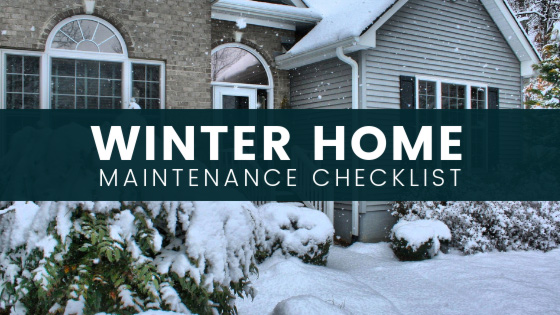
Winter Home Maintenance Checklist


Contact me at www.kimlouie.net for a Free Home Value Report!
With the winter just around the corner, it’s time to get your house in shape for the cooler months ahead. Although autumn can be one of the busiest seasons for homeowners preparing for winter, it’s also the best time to take advantage of the moderate weather to repair any damages before the first frost sets in. Here are some home maintenance tips that will keep your home running in peak condition all winter long.


Outdoor Preparation

  • Check the roof for cracked or missing shingles, bald spots on shingles, missing or damaged flashing, and other conditions that might allow leaks. Replace any roof shingles that are missing or damaged. Seal minor cracks or tears with roofing cement.
  • Check the gutters. If they are clogged with leaves and debris, clean them. Gutters prevent basement and foundation flooding and water damage to siding, windows, and doors.
  • Check the siding for cracks or damage and seal any leaky spots with clear caulking compound.
  • Windows and doors. Make sure they are properly sealed with weather stripping and replace any damaged parts. Weather stripping prevents drafts and winter heat loss.
  • Trim trees and bushes away from the house.
  • Cover air conditioner and barbecue to prevent winter damage.
  • Store lawn and patio furniture in a shed or basement. If space is limited, use weather-resistant covers that can protect outdoor furniture.
  • Close your pool before leaves start to fall and night-time temperatures begin to drop, otherwise, you may risk an algae bloom.
  • Drain and shut off outdoor water faucets and remove and store garden hoses.
  • Store kid's toys indoors or in an outdoor shed to prevent rusting and fading.
  • Check and repair exterior lighting before daylight fades.
  • Scrape peeling paint and apply touch up paint to your siding, trim and fences, and apply waterproofing sealer to your deck if necessary.
  • Examine driveways and walkways for cracks. Larger cracks should be sealed to keep out water.

Lawn and Garden

  • Prepare planting beds when the soil is relatively dry. By adding soil and mulch to your beds, you'll be a step ahead for spring planting.
  • Plant spring-blooming bulbs and perennials.
  • Protect roses, saplings and small trees by sheltering them with a burlap screen.
  • Pull weeds to reduce the number of seedlings next spring.
  • Mow grass short for the final cut of the year by reducing the cutting height gradually to 3.5 cm (from 7.4 cm) until the grass stops growing.
  • Check ground grading around the house. All surfaces next to walls should be sloped to shed water away from the house. This is most important on warm winter days, as melting snow runs quickly across the surface of the frozen ground. If the grading is incorrect, water will potentially flow into the house, causing basement leakage. Now is the time to use a shovel to re-slope the grass, or call a paving contractor to correct a negatively sloped walkway or driveway.

Indoor Preparation

  • Bring container plants inside and make sure they are free of pests. Doing so may enable plants to survive the season and bloom again in spring.
  • Caulk around window and door casings to keep out air and water. If your house has wood siding with window frames that stand out from the siding, caulk the top and sides of the frame. Don't caulk under the sill as this space should be left open to allow moisture inside the wall to escape. If your house is brick or stone, with window frames that are set into the finish material, caulk all four edges of each frame where the brick mould meets the masonry.
  • Clean or replace furnace filters as needed. Check and clean dryer vent, air conditioner, stove hood, and room fans. Keep heating and cooling vents clean and away from furniture and draperies.
  • Ensure that all smoke detectors, carbon monoxide detectors, and fire extinguishers are in good working order. Replace batteries as needed, or at least twice each year.
  • Have your heating system checked by a licensed heating/air-conditioning professional. Most furnace manufacturers recommend annual inspections.
  • Have your chimney(s) inspected by a chimney service and, if necessary, cleaned. Cleaning is generally recommended at least once a year for an active fireplace.
  • Store plenty of salt or rock salt, snow shovels, and any other items you will need during the winter.
  • Examine the basement floor and walls for cracks or leaks; seal as needed.


If you plan to reside elsewhere during the winter months, you may want to partially shut down your home. In addition to the tips above, consider the following:

  • Leave the temperature at its lowest setting, usually between 5 to 7 degrees Celsius or install a low-heat thermostat to maintain the air temperature at approximately 5 degrees Celsius
  • Turn off and drain the water heater; leave a reminder to refill before restarting.
  • Keep the electricity on so lights will continue to function (put lights on timers).
  • Unplug the microwave, clothes dryer, televisions and other appliances not in use.
  • To avoid large repair bills and the hassle associated with breakdowns, take the time now to develop an action plan for the coming months. You'll feel secure in your warm home or while you're away from home.

Winter can be hard on a house, following these steps will help preserve your investment and prevent any unnecessary chores or repairs that might be difficult to do during winter.

Thursday, October 3, 2019

September Home Sales and Prices Set New Records


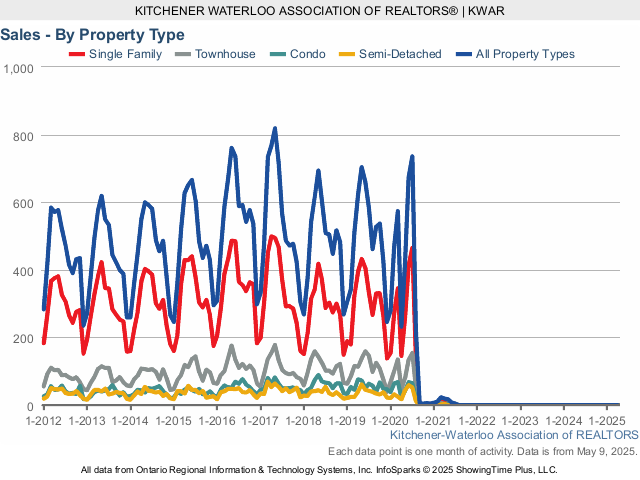
526 residential properties sold through the Multiple Listing System (MLS® System) of the Kitchener-Waterloo Association of REALTORS® (KWAR) in September, an increase of 17.7 per cent compared to the same month last year.     

Home sales in September included 330 detached (up 20.4 per cent), and 38 condominium apartments (down 24 per cent). Sales also included 125 townhouses (up 34.4 per cent) and 33 semi-detached homes (up 10 per cent).   

This was the second strongest September for home sales we’ve had on record, and only the second time transactions exceeded 500 units in the month of September,” says Brian Santos, KWAR President.  

Alongside the strong sales in September, average and median prices of all residential properties hit all-time highs.  

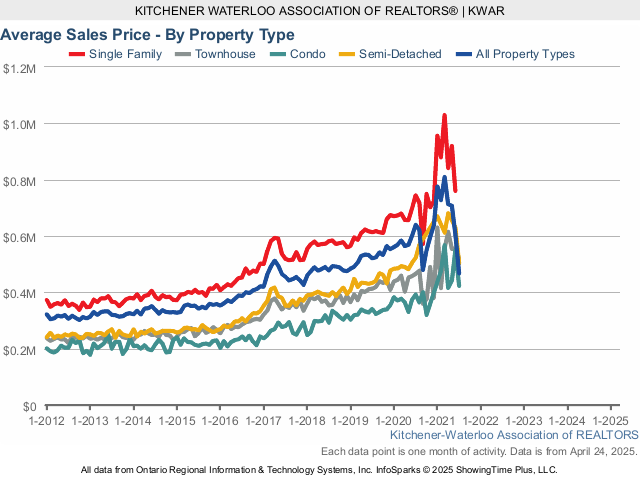
The average sale price of all residential properties sold in September increased by 10.2 per cent to $541,850 compared to September 2018. Detached homes sold for an average price of $612,643 (an increase of 7.1 per cent compared to September of last year. During this same period, the average sale price for an apartment-style condominium was $335,110 for an increase o3 per cent. Townhomes and semis sold for an average of $439,522 (up 16.3 per cent) and $459,588 (up 18.9 per cent) respectively.  

The median price of all residential properties sold last month increased 12.6 per cent to $510,000 and the median price of a detached home during the same period increased by 10.9 per cent to $576,500. 

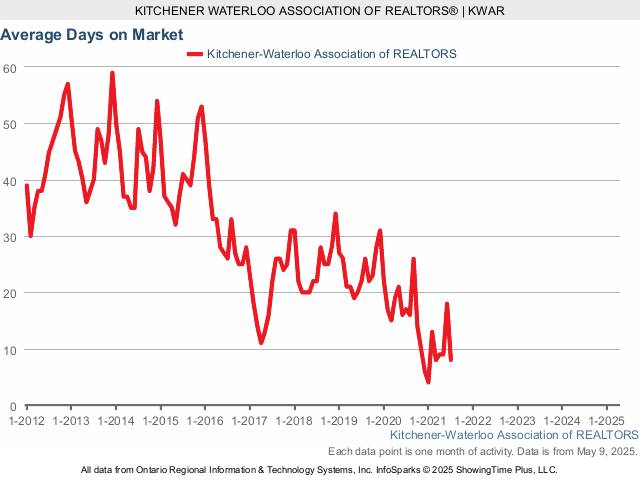
The average days it took to sell a home in September was 22 days, which is three days fewer than it took in September 2018.  

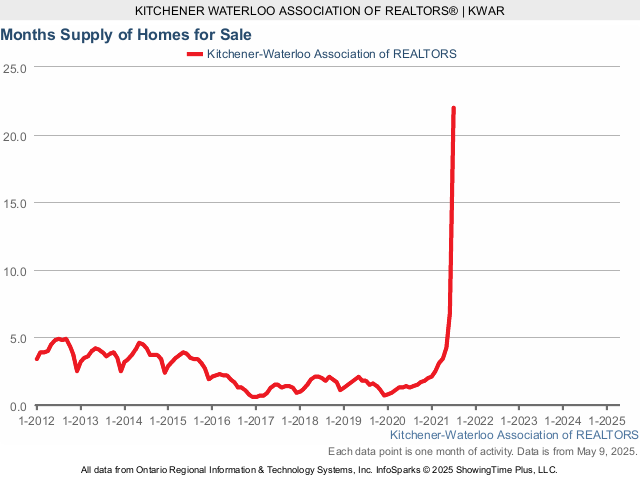
REALTORS® listed 811 residential properties in K-W and area last month, a decrease of 2.1 per cent compared to September of 2018but an increase of 5.2 per cent in comparison to the previous ten-year average for the month of September. The total number of homes available for sale in active status at the end of September totalled 775, a decrease of 21.7 per cent compared to September of last year, and well below the previous ten-year average of 1,458 listings for September. Months Supply of Homes for sale stood at 1.6 months in September, which is 23.8 percent lower than the same period last year. The previous ten-year average months supply of homes for September was 3.16.    

Tight supply is the new normal,” says Santos. “We’ve been tracking under two months of supply for over three years nowand this has put steady upward pressure on prices.  

Santos says market conditions have made it especially challenging for first time home buyersnoting that all the major political parties have made policy commitments related to home buying going into the upcoming federal election.  


ep

Thursday, September 26, 2019

Tips to Avoid Overspending

CONTACT ME AT WWW.KIMLOUIE.NET FOR A FREE HOME VALUE REPORT!


Do you have significant debts as a result of overspending? If you do, you are not alone. Modern society makes it particularly easy to spend more than we really should. However, if you want to clear your debts and have greater peace of mind, it is important to tackle the root cause, which is overspending.
Overspending can be an indicator of a deeper issue as well and therefore, it should be addressed properly. This article suggests some useful tips to help you know how to avoid overspending.
1. Accept that a problem exists
In order to seek a solution to something, you must accept that the problem exists. Try to decipher the reasons behind your overspending. Identify situations that make you overspend. Understanding the root cause of your behaviour will assist you in finding a workable solution to your extravagant ways. People tend to hide and ignore such issues as if they don’t exist at all. Your refusal to admit that you overspend will never let you conquer your shopping impulses.
2. Be aware of how much money you spend
Many chronic spenders live in denial about how much they spend. If you realize how much you spend on various items, this alone may be sufficient to reduce your spending. Keep a log of your daily spending, or go through your bank accounts, credit card statements and add up how much you spend on different items and decide whether you really want to spend that much money.
3. Set a financial limit
If you really have trouble controlling your spending it will be very effective to give yourself strict amounts of spending per week. This will work most effectively with cash because it is easier to monitor. If you learn to live on a limited amount per week, you will value money more and learn more frugal habits.
4. Plan your purchases ahead of time
Planning ahead can really help with grocery shopping and buying gifts. You can actually take advantage of sales and only buying things that you really need.
5. Avoid impulsive purchases
Make an effort to have a moment of reflection before buying anything. If you see something you would like to buy, try waiting a day before actually committing yourself to making the purchase. If you really want it, you will come back. This also gives you the chance to find other things that may be better.
6. Do comparison shopping
As prudent spenders, comparison shopping is a prerequisite to smart spending. With great tools online, it is getting easier and faster to comparison shop. Make a habit of searching newspaper flyers for your weekly grocery items.
7. Use cash – avoid credit cards
Avoiding credit cards helps in overcoming the impulse of overspending. You should carry only the amount you intend to spend. This, in turn, prevents you from indulging in unnecessary purchases and expenses.
8. Avoid spending by habit
Quite often a lot of our spending is a daily habit. However, this spending could easily be unnecessary. For example, if you buy takeout coffee every day, why not invest in a coffee machine. Just because you spend $10 a day on lunch doesn’t mean this habit has to continue forever. Try taking your own lunch. Re-evaluate all your habitual spending patterns and decide whether it is necessary.
9. Reward yourself on every success
Make sure that you reward yourself with a lucrative incentive every time you control an urge to shop. Encourage yourself to exercise restraint. Every success over compulsive spending calls for a pat on your back and is worth an enticing reward so that you can bring yourself to avoid overspending the next time. Make sure you don’t head off to the market to reward yourself, or the entire purpose will be defeated.
10. Get help
If you are unable to control your spending impulse, then you must admit this drawback and accept help from your spouse or relatives. Ask them to help keep control over you so that you do not spend more than required.
In addition, you need to start valuing money and the hard work that goes in earning it. This thought and understanding will help you spend money in a responsible way.

Before Buying, Be Sure to Check Out Some Open Houses!


CONTACT ME AT WWW.KIMLOUIE.NET FOR A FREE HOME VALUE REPORT!


Open houses are the gold standard in real estate. They’ve been around for decades and will be ingrained in the buying and selling of homes for years to come. But as a buyer, are you making the most of your open house visits?
To get the most out of an open house visit, follow these guidelines:

Use the open house to learn about the market without committing
Even if you’re not serious about moving, viewing a few properties in a neighbourhood you like is a great way to get a sense of the market. Who knows? You might stumble upon your next dream home!

New buyers should leverage the open house opportunity to get a feel for the market. Most open houses will have a handout available containing the list price and other property information. Be sure to keep a copy.

Ask the agent questions
Explore the entire property, including the backyard. Don’t be shy about asking the listing agent questions about the property and the neighbourhood.

• Ask about the area. Are there schools nearby? Where is the nearest park or playground located?

• Ask about potential required repairs and renovations. For example, if the furnace is more than 15 years old, it may need to be replaced soon.

• If it’s a competitive market, ask questions such as: “Why is the seller selling?” “Is there a certain day to review offers or have you had a lot of showings?” In a slow market, ask how long the property has been on the market and what the seller’s motivations are. A good agent will engage you because it’s good for his seller.

Many agents are eager to quiz open house attendees about their home-buying plans. "How long have you been looking for a home? Are you working with an agent? Are you pre-qualified for a mortgage?" they ask. Why not turn the tables? An open house can be an opportunity for you to pump a local agent for some information about for-sale homes and the housing market.
Watch the other buyers
You can tell a lot about the activity and marketability of a home by watching the other buyers. If you observe a lot of people walking in and out quickly, the home probably has some issues. Are the buyers hanging around, asking questions of the listing agent and huddling in the corner talking to their spouses or partners? If so, it could be a sign this is a well-priced and “hot” listing. If you’re interested too, observing other buyers at the open house could help you learn about the competition.

Finally, walk around the neighbourhood. Try to get a sense of what it’s like to live there. If possible, chat with a neighbour.

If you become interested in the home, be sure to advise the listing agent that your own REALTOR® will be following up. Otherwise, the listing agent might assume that he or she will be representing you.

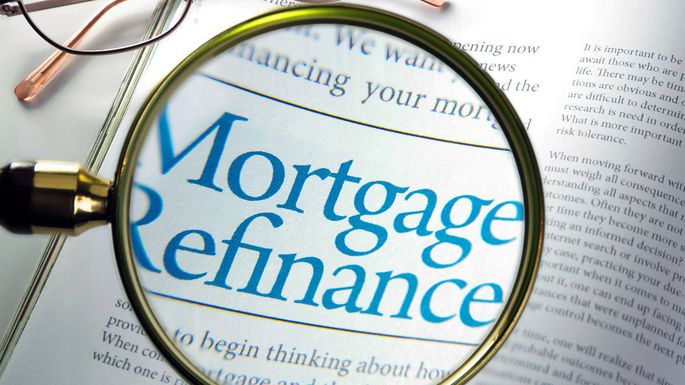
When to refinance your mortgage?


CONTACT ME AT WWW.KIMLOUIE.NET FOR A FREE HOME VALUE REPORT!

Since interest rates are at a 40-year low, switching to a lower rate may save you a lot of money – possibly thousands of dollars per year. There are penalties for paying your mortgage loan out prior to renewal, however, these could be offset by the extra money you save through a refinance.

What's your goal? Before deciding whether or not to refinance, you need to determine what you want to accomplish. Remember, a refinance doesn't pay off the debt; it just restructures it, often at a lower interest rate and a different loan term than the current mortgage.
1- Reducing the interest expense is the most common goal of a refinance. But some homeowners also appreciate the ability to extend the loan back out to 30 years, reducing the monthly payment.
2- Debt consolidation is another goal of refinancing. If you have both a first mortgage and a home equity mortgage, combining the two mortgages into one fixed-rate mortgage levels out the payment over the loan term.
3- Getting cash from your home. The equity you have in your home can act like a savings account that you could access through a home equity loan or a cash-out refinance. This is usually done when you want to finance an important home improvement, pay for college or pay off high-interest credit card debt. Whatever your reason, this may be the right option for you.
When to refinance?
After determining your reasons for refinancing, you need to consider whether the timing and circumstances make this the right time to get a new mortgage.
You may be better off to stay with your current mortgage. For example, if your current mortgage has a high prepayment penalty or if you plan to move from your home in the next few years or when the monthly savings gained from lower monthly payments may not exceed the costs of refinancing.
As a rule of thumb, it pays to refinance if you can get an interest rate at least two percentage points lower than what you are currently paying. Asking yourself a few questions may help you determine if you can save money:
  • How much can I lower my current monthly payment? 
  • How long do I plan to stay in the house after I refinance?
  • How much will I pay in refinancing costs? 
How to refinance?
Refinancing is similar to the process you encountered when you closed on your first mortgage. It requires an application, credit check, new survey, and title search, as well as an appraisal and inspection fees. As you know, this process can be quite lengthy and expensive.
Keep in mind, however, that by refinancing you may extend the time it will take to pay off your mortgage. That said, there are many ways to pay down your mortgage sooner to save you thousands of dollars. Most mortgage products, for instance, include prepayment privileges that enable you to pay up to 20% of the principal per  calendar year. This will also help reduce your amortization period (the length of your mortgage), which in turn saves you money.

Thursday, September 5, 2019

AUGUST HOME SALES EASE AS PRICES CONTINUE TO RISE ALONG WITH DEMAND


459 residential properties sold through the Multiple Listing System (MLS® System) of the Kitchener-Waterloo Association of REALTORS® (KWAR) in August, a decrease of 9.1 per cent compared to the same month last year.    


Home sales in August included 267 detached (down 11.9 per cent), and 56 condominium apartments (down 13.8 per cent). Sales also included 97 townhouses (down 4.9 per cent) and 39 semi-detached homes (up 11.4 per cent).

“The number of homes sold last month was below the average for August; however, we continue to see strong price gains across all property types,” says Brian Santos, KWAR President.

The average sale price of all residential properties sold in August increased by 6.4 per cent to $524,482 compared to August 2018. Detached homes sold for an average price of $615,568 (an increase of 5.4 per cent compared to August of last year. During this same period, the average sale price for an apartment-style condominium was $324,778 for a decrease of 3.1 per cent. Townhomes and semis sold for an average of $420,239 (up 18.3 per cent) and $441,802 (up 10.2 per cent) respectively.

The median price of all residential properties sold last month increased 8.1 per cent to $495,000 and the median price of a detached home during the same period increased by 2.8 per cent to $560,000.

REALTORS® listed 574 residential properties in K-W and area last month, a decrease of 14.5 per cent compared to August of 2018, and a decrease of 13 per cent in comparison to the previous ten-year average for the month of August. The total number of homes available for sale in active status at the end of August totalled 734, a decrease of 17.3 per cent compared to August of last year, and well below the previous ten-year average of 1,426 listings for August. Months Supply of Homes for sale stood at 1.5 months in August, which is 16.7 percent lower than the same period last year.

The average days it took to sell a home in August was 26 days, which is two days fewer than it took in August 2018.

“We’re noting differences in market balance depending on the price range,” says Santos. “For homes priced under $600 thousand, it is still a strong seller’s market, whereas above $600 thousand, it is a more balanced situation.”

As an indicator, Santos points to the month’s supply of homes, also known as the absorption rate. For homes priced at more than $600,000, the months of supply stood at 3.4 in August, compared to 0.9 months for homes prices under that amount. Months supply is the inventory of homes for sale at the end of a given month, divided by the average monthly closed sales from the last 12 months. The previous ten-year average months supply across all price ranges has been just over 3 months.

“It all comes down to what the buyers can find in their price range,” says Santos. “Homes in Kitchener-Waterloo are definitely in high demand, and there is strong competition among buyers trying to find one that will suit them.”

Santos advises buyers to work with a local REALTOR® who has a complete understanding of our region to give them an advantage in this crowded KW housing market.